Polypropylene (PP) is similar in many respects to high-density polyethylene (HDPE). However, instead of forming a long polymer chain made up of repeating –CH2 components, the polypropylene molecule has a series of CH3 groups that hang off the main carbon backbone. Porex PP is isotactic — that is, the CH3 groups are oriented on one side of the carbon backbone. This orientation creates a greater degree of crystallinity, making PP stiffer and more resistant to creep (the tendency to flow under stress) as compared to polyethylene (PE).
Polypropylene (PP) is highly resistant to most acids and alkalis. It is resistant to most organic solvents below 176°F (80°C). Its use at high temperatures depends on conditions in addition to heat, but as a rule, PP may be used at temperatures ranging from 200 to 300° F (93°C to 149°C) if not stressed. Thus, PP products can be sterilized in an autoclave.
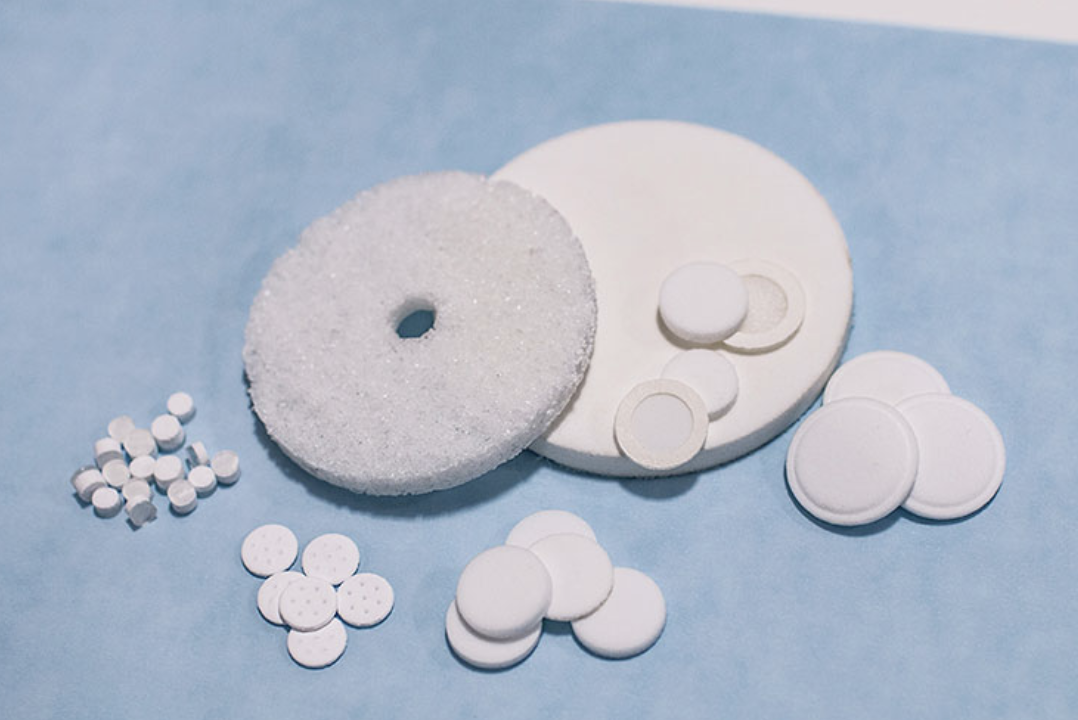
Available in molded shapes, sheets, and tubes, the nominal pore size for PP ranges from 80 to 150 micrometers.